Moving Estimator
A walkthrough video in, a removals quote in seconds
The customer films their own home. Computer vision identifies and counts every object, estimates dismantling, handling and transport time, and returns a priced quote.
One platform, three products in it: the school runs the tenant, the teacher runs their own students, and the student runs their own path — with exam integrity enforced by computer vision rather than trust.
See it livesecurity-circles-group.comRemote assessment has an integrity problem. Once an exam leaves a supervised room, the institution has no reliable way to know who sat it or what they had open beside them.
The usual answers are bad ones: return to physical invigilation and lose the reach that made online learning worthwhile, or accept the cheating and watch the qualification lose its value.
Monitoring alone does not fix it either. If every candidate sits the same paper with the answers in the same order, one screenshot shared between two people defeats the whole exam no matter how carefully each session is watched.
And a platform serving one learner is not the same product as one serving a school. The moment a school enrols, the question stops being who is watching and becomes who is allowed to see whom — a teacher must not see another teacher's students, and an administrator must see the whole school.
Structured courses with built-in video streaming and interactive lecture features, so the assessment sits inside a coherent learning path rather than bolted on.
Quizzes are generated from a centralised question bank rather than fixed papers, so no two candidates sit an identical exam.
AI monitoring runs during high-stakes exams — eye tracking, person detection and mobile device detection — flagging the specific behaviours that indicate a compromised session.
Questions are drawn at random per candidate from the bank, and the options within each question are shuffled independently as well — so two people sitting side by side see neither the same questions nor the same answer order. Sharing a screenshot stops being useful.
A detected violation captures a screenshot as evidence against the session. Switching tabs ends the exam; looking away from the screen too often ends it too. The rules are stated to the candidate before they start, so enforcement is a condition of sitting rather than a surprise.
A school enrols and gets its own tenant. Teachers see only the students assigned to them; the school administrator sees every student across the school; a student sees themselves. Scoping is enforced server-side rather than hidden in the interface.
Every question type is machine-gradeable, so results and feedback return the moment the exam ends. Passing the final exam generates the certificate and sends it — for a school candidate and an individual learner alike, with no administrator in the loop.
Eye tracking, person detection and mobile detection raise integrity events against the session rather than trusting the candidate.
A multi-tenant LMS: schools enrol and run on their own dashboard, alongside individual learners on the same platform.
Video streaming with interactive lecture features built into the platform.
Seven progressive levels with assessment at each stage, and badges awarded on completion.
Computer-vision proctoring: eye tracking, person detection and mobile device detection during high-stakes exams.
Screenshot capture on a detected violation, retained as evidence against the exam session.
Automatic termination on tab switching, and on repeated gaze away from the screen.
Per-candidate randomisation — questions drawn at random from the bank, and the options within each question shuffled independently, so no two papers match.
Four question types, all machine-graded: multiple choice single select, multiple choice multi select, match the column, and ordering a sequence.
Instant automated grading with immediate performance feedback.
Automatic certificate generation and delivery on passing the final exam, for school candidates and individual learners alike.
Role-scoped dashboards — a teacher sees only their assigned students, a school administrator sees every student in the school, a student sees themselves.
Analytics per student across lectures watched, exams taken, averages and progress, with reporting for teachers and administrators.
Built for a programme accredited by Saudi Arabia’s National eLearning Center (NELC).
The full scope, grouped by the part of the programme it serves — exam integrity, the assessment engine, the three role modules, and the path from first lecture to issued certificate.
The part that makes a remote qualification worth holding. Violations are acted on during the sitting, not written into a report someone reads afterwards.
Gaze monitored throughout the exam; repeated looking away from the screen ends the sitting rather than raising a note.
A second person entering frame is detected and flagged against the session.
A phone in shot is treated as a violation in its own right.
A detected violation captures the frame and retains it as evidence against the exam session.
Leaving the exam window ends the exam. The rule is stated before the candidate starts, so it is a condition of sitting rather than a trap.
Every integrity event written against the sitting, so a disputed result can be examined rather than argued.
Four machine-graded question types and per-candidate randomisation — so no two people sit the same paper, and every one of them is marked the moment they finish.
The standard form, drawn from the centralised bank.
Partial-credit scoring where more than one answer is correct.
Pairing across two sets, machine-graded.
Candidates place steps in the correct order — the type that actually tests procedure.
Questions selected at random from the bank for each sitting.
Options reordered independently within each question, so a shared screenshot of answer positions is worthless.
Results and per-topic feedback returned the moment the exam ends.
The platform presents as three distinct products, each scoped to what that role may see and do. A school enrols and runs on its own tenant; who may see whom is enforced on the server, not hidden in the interface.
Runs the tenant. Enrols cohorts, manages teachers and students, sets programme structure, and sees every student across the school in one view with cross-cohort comparison.
Scoped strictly to their assigned students — attendance, progress and results pre-filtered, with flagged integrity violations to act on.
Their own record only, enforced server-side on every endpoint: lectures, proctored assessments, immediate feedback and the certificate on pass.
A school onboards onto its own dashboard, alongside individual learners on the same platform.
The same course and the same certification path, without a school behind them.
Seven progressive levels, with the analytics each audience actually needs and a certificate that issues itself.
Seven progressive stages with assessment at each, so a learner advances rather than browses.
Course delivery built into the platform rather than linked out.
Awarded on level completion, so progress is visible before the final exam.
Lectures watched, exams taken, averages and progress over time.
Per-student and cross-cohort performance reporting for the people accountable for it.
Passing the final exam generates the certificate and sends it — for school candidates and individual learners alike, with no administrator in the loop.


High-stakes exams delivered remotely, with violations acted on rather than merely logged
No two candidates sitting the same questions in the same order
Immediate grading and performance feedback across four question types
Certificates issued automatically on pass, with no administrator in the loop
Schools running on their own tenant, with teachers scoped to their own students
Progress visible to the student, the teacher and the school in the terms each of them needs
Platform built for a programme accredited by Saudi Arabia’s National eLearning Center
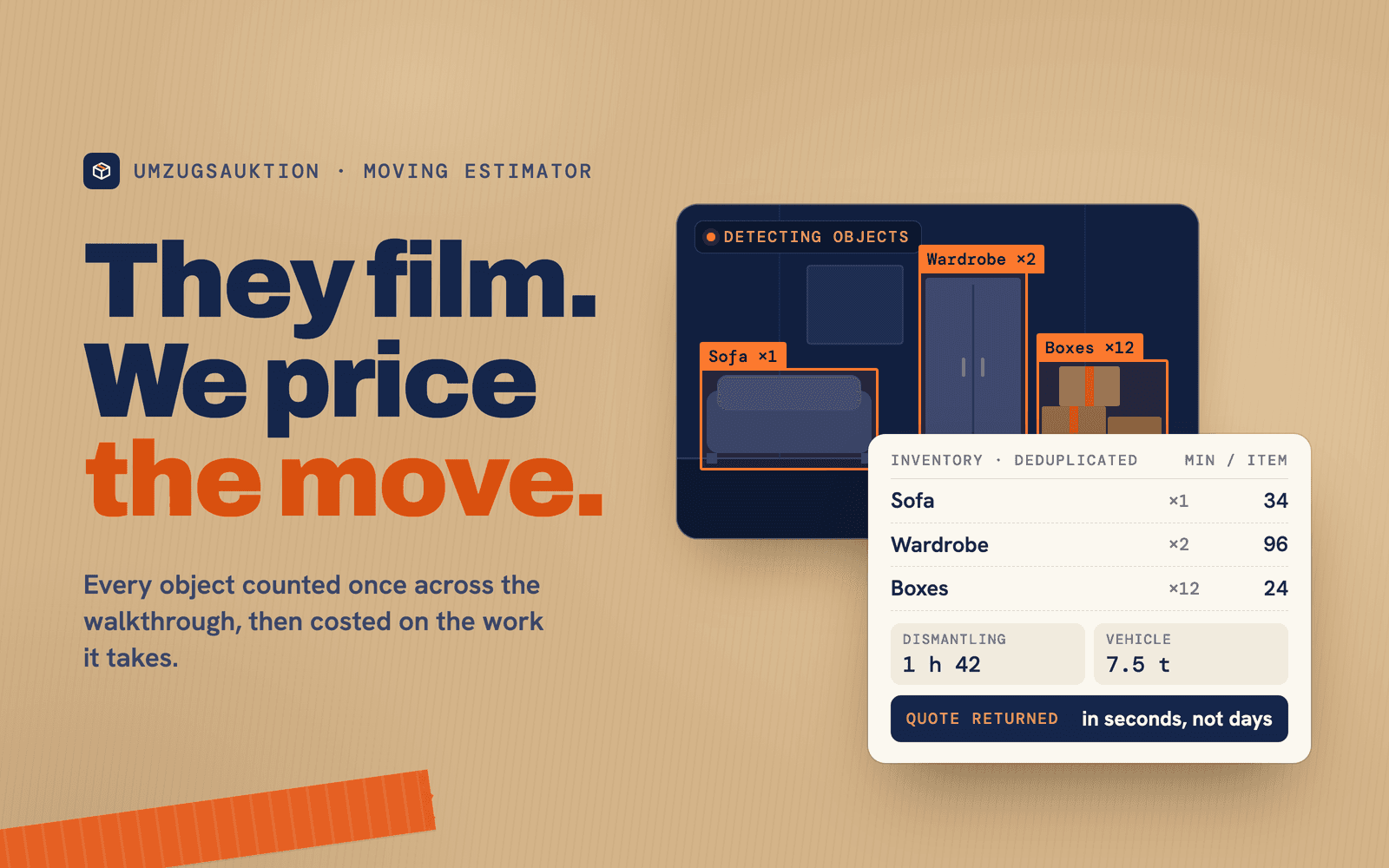
A walkthrough video in, a removals quote in seconds
The customer films their own home. Computer vision identifies and counts every object, estimates dismantling, handling and transport time, and returns a priced quote.

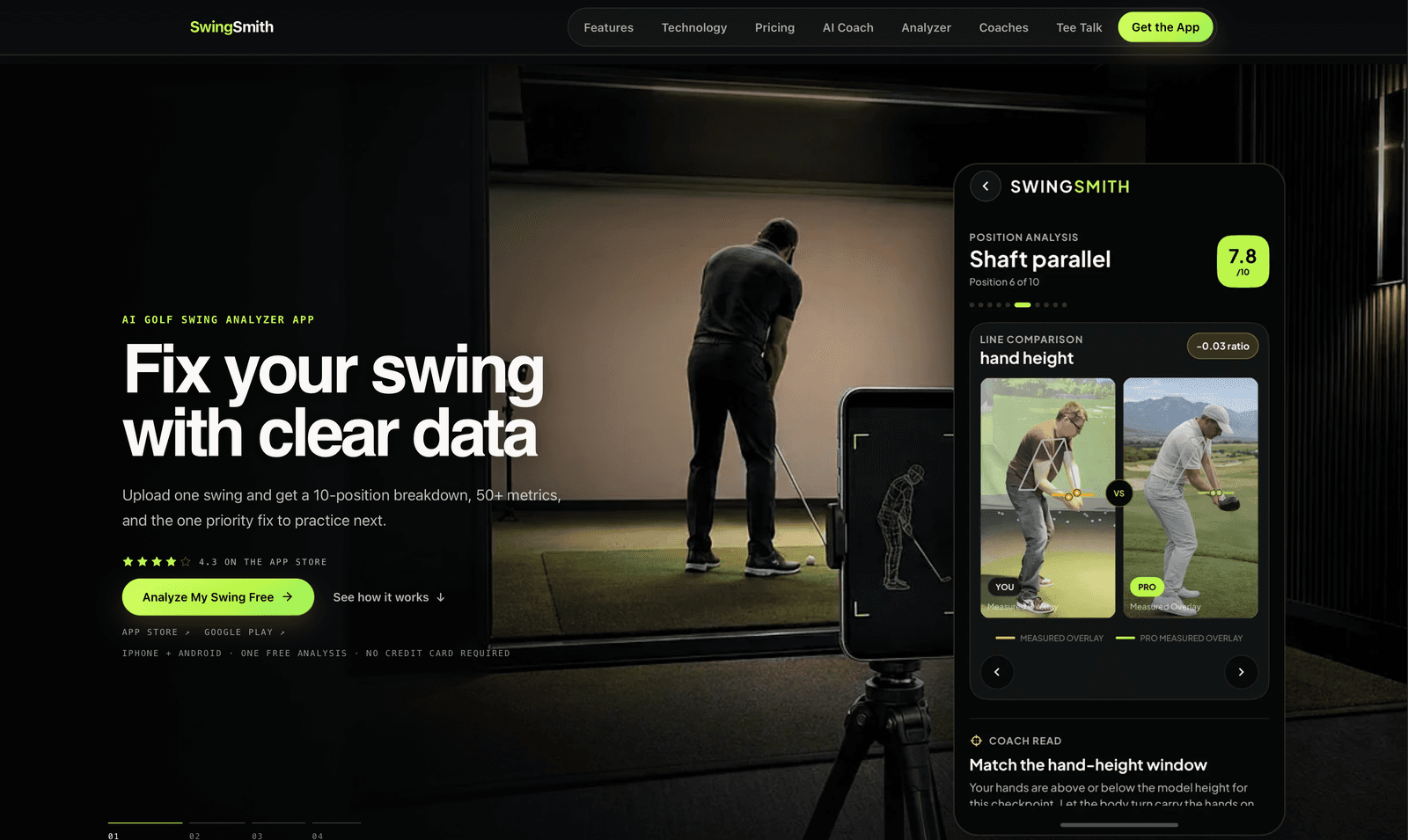
AI golf swing analyser with a 10-position engine and in-app coach
Upload one swing from a phone and get a 10-position breakdown, 50+ metrics, and the single fix worth practising next.

Three modules that read a feasibility study, judge it, and write a new one from scratch
Three modules: one reads a feasibility and fills the whole Excel model, one benchmarks it against world standards and returns a gap analysis, and one generates an entirely new professional feasibility from historical data.