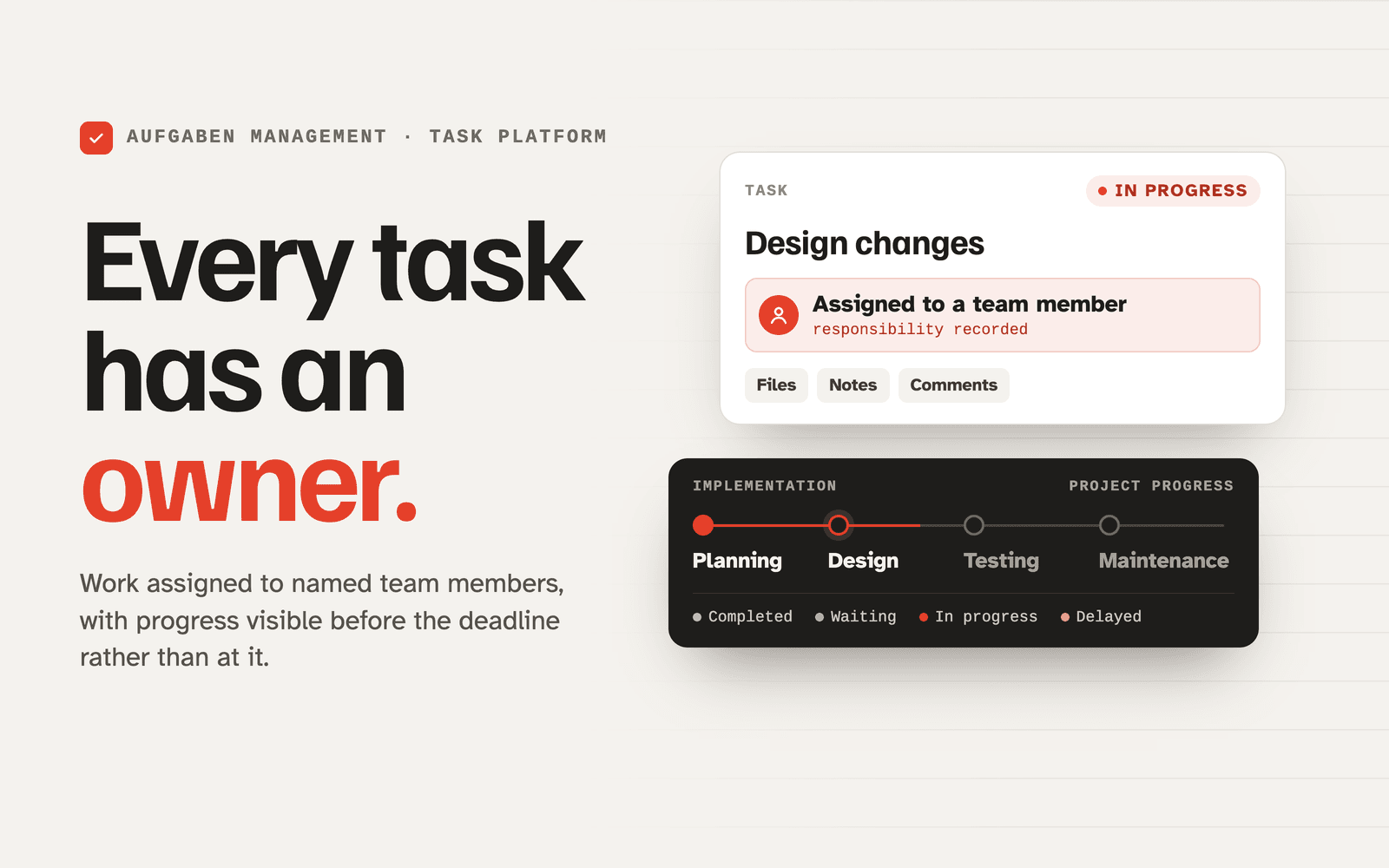
Aufgaben Management
Task, project and deadline management for delivery teams
Assignment, progress tracking and collaboration in one place, so teams know who owns what.
The same product at both ends of the market: one school switches on what it needs, a group adds branches without cloning anything, and five curricula run side by side in either.
School software is usually built for one school and then stretched to fit a group, or built for a group and far too heavy for a single site. The moment an operator runs several branches, everything that was a single value — the fee policy, the curriculum, the grading scale — becomes a decision about who owns it. Build that in late and it never fits.
A branch does not run one curriculum either. British for the younger grades and IB for the older ones is an ordinary arrangement, and which curricula a branch offers varies branch to branch. Treating curriculum as a property of the school makes that impossible to express.
Arabic is not a translation pass. Layout direction, date handling and even a plain time range behave differently, and a product that treats RTL as a stylesheet toggle breaks in ways nobody catches until a real user reports it.
And approvals in this sector do not stop at school staff. Fee waivers and policy exceptions need sign-off from board members, group directors and per-school committees — people who are not employees and do not appear in any staff hierarchy.
Every row carries its tenant, and Postgres row-level security enforces it in the database rather than relying on every query being written correctly. A missed filter returns nothing instead of another school’s data.
A generic lock-or-delegate framework lets a group either fix a setting for every branch or hand it down — while a single school simply owns all of them, with no group layer in the way. Fee policy was the first consumer; approval chains and grading scales now run on the same mechanism.
A branch declares the curricula it offers, grade levels are created per curriculum, and sections inherit from their grade with a per-section override. Exams, grading scales and report cards resolve from the section — so a British section and an IB section in the same building are graded on their own terms.
English and Arabic dictionaries ship in code with a database-backed override table, so any string — or a whole new language — changes without a redeploy. Layout uses logical CSS properties throughout rather than left and right, and numeric ranges are direction-isolated so a time range does not reverse itself in Arabic.
A generic approvals engine handles any request type, with either N-of-M voting or a strict sequential chain — accountant to principal to committee president to chairman — where each step unlocks only once the previous one signs, and a rejection vetoes immediately.
Teachers land on their own classes, with attendance and marks pre-filtered to the sections they are actually assigned to. Parents see only their own children, enforced server-side on every endpoint. Admins see the school; the operator sees the group.
The same product at both ends. Adding a branch adds a layer of ownership — it does not change the software underneath.
Tenant isolation enforced by Postgres row-level security, so a missed filter returns nothing rather than another school’s data
A generic lock-or-delegate settings framework, proven live on both paths, now carrying fee policy, grading scales and approval chains
Curriculum modelled per grade level with a per-section override, so exams, grading scales and report cards resolve from the section rather than the school
A public, unauthenticated admissions endpoint with a manually-built tenant context, rate limiting, and row-locked test-slot booking verified under a genuine two-request race for the last seat
Offer letters generated as real PDFs without a headless-browser dependency to carry in production
Per-branch timezones, so “today” resolves to the branch’s calendar day and a school ahead of UTC never loses its own attendance
Timetable conflicts prevented on three independent axes — teacher, room and section — with accurate per-axis errors rather than a parsed database error
Right-to-left handled as layout, not translation: logical CSS properties throughout, and direction-isolated numeric ranges so a time range does not reverse itself in Arabic
Server-side ownership checks on every parent-facing endpoint, verified with live negative tests rather than hidden in the interface
Plan changes appended to a per-school history, so proration splits an invoice period across however many price changes fell inside it
Confirmed subscription prices frozen at contract time, so later rate-card edits never retroactively reprice an existing school
Video uploaded browser-to-CDN so files never touch the application servers, reconciled by webhook-verified background jobs
The full scope, grouped by the part of the school it serves. Each school switches on only the modules its package includes.
The layer every other module sits on: who a user is, which school they belong to, and what their group has decided they may change.
Group, branch and academic-year hierarchy with tenant isolation enforced by database row-level security rather than by query discipline.
JWT with refresh tokens and permission middleware across super admin, group admin, branch admin, teacher, parent, student, staff, librarian and accountant roles.
A generic lock-or-delegate model: the group either fixes a setting for every branch or hands it down. Fee policy, grading scales and approval chains all run on it.
English and Arabic dictionaries in code with a database-backed override table, so any string — or a whole new language — changes without a redeploy.
Locale tabs, an add-language flow, and a per-key editable table with default, customised and missing badges plus revert.
Provider-agnostic email, SMS, WhatsApp and push adapter with per-language templates.
Bilingual type, RTL and LTR through logical CSS properties throughout, light and dark, and a shared component library across web and mobile.
Create and manage tenants, school groups and branches, with global search across the whole estate.
Four tier presets with per-module, per-school toggles on top and a change log behind them.
Filterable by record, so an audit officer can pull the full history against a single invoice rather than scanning a feed.
Logo and accent colour theming per branch.
Custom domain with automated SSL, full theme override and platform branding hidden.
Documented API, per-school API keys and webhook subscriptions.
Everything from an enquiry arriving on a public form to a student sitting in a named section of a named curriculum.
A public, no-login application flow with an opaque per-application access token, capacity-enforced entrance-test booking, and generated offer letters.
Profiles, admission numbers, guardians, siblings, documents, and enrolment history per academic year.
Academic years, grade levels created per curriculum, class sections, and subjects — so British and IB grades coexist in one branch.
Status and movement tracked against the enrolment record rather than overwritten.
The daily academic loop: who teaches what, who turned up, what they scored, and what goes home on the report card.
Homeroom or per-subject assignment, and the access-control foundation attendance and examinations both depend on.
Daily and per-period marking with present, absent, late and excused states, resolved against each branch’s own timezone rather than the server clock.
Exam sittings bundling subjects with per-subject maximum and passing marks, and a marks roster that distinguishes absent from a scored zero.
Curriculum-agnostic, with platform defaults for British, American, IB, Pakistani Federal Board and Oman national curricula, and a per-school override.
Weighted per-subject averages across a term, mapped through the school’s scale, with GPA and IB points, per student or batched for a class.
A weekly grid on the GCC school week with teacher, room and section conflicts each prevented independently, plus date-specific substitutions that leave the recurring pattern intact.
Plans authored against a class section and surfaced in the teacher’s own view.
Assignments, homework and quizzes with multiple-choice, true/false and short-answer types, plus video uploaded browser-to-CDN and processed asynchronously.
Two access tiers — class and subject resources a teacher may only create for sections they teach, and school-wide content reserved for librarians and admins.
Marking-scheme upload feeding an auto-grading pipeline.
Special educational needs tracking, behaviour and discipline records, and surveys and feedback.
Four audiences, four products. Each one sees only what belongs to them, checked on the server rather than hidden in the interface.
A my-classes landing page with attendance, exams and lesson plans pre-filtered to the sections the teacher is actually assigned to.
One card per linked child, then enrolment, attendance, report cards and invoices — with an ownership check on every endpoint, verified against negative tests.
Timetable, homework, results and library access.
Parent, teacher and admin threads with admin oversight and audit visibility for safeguarding.
School-wide posts with optional per-role audience targeting, surfaced on every role’s dashboard.
A month grid with multi-day date-range events, per-role targeting and an overflow chip for busy days.
Teacher availability slots with in-person and virtual bookings.
The money and the moving parts — from a parent’s overdue invoice to the buses, the clinic and the stock cupboard.
Invoice generation per structure and cycle, many-to-one allocation so one payment settles several overdue invoices, and automatic late-fee computation.
Fixed or percentage late fees, grace periods and an arrears ladder, owned at group level with an optional branch lock.
The group billed per period and itemised per branch, with multi-currency rate cards and day-accurate proration across mid-period plan changes.
Budgeting, expense tracking and multi-currency financial reporting.
WPS wage-protection file generation, gratuity and end-of-service calculation, and GOSI/PASI integration.
Contracts, leave, staff attendance and document-expiry tracking.
Purchase orders, stock tracking and supplier records.
Maintenance requests, room booking and asset registers.
Catalogue, circulation and fines.
Medical records, vaccination tracking and nurse visit and incident logs.
Routes, GPS tracking, driver records and transport fee billing.
Boarding, canteen accounts and visitor management.
Hiring and onboarding, performance and development, and alumni records.
Who signs off on what, and what the numbers say afterwards. The part most school software leaves to email and spreadsheets.
A request-anything engine with three governance roles, notifications on create and decide, auto-escalation for stale requests and a needs-my-vote filter.
Accountant to principal to committee president to chairman, each step unlocking only once the previous one signs — or N-of-M voting where order does not matter.
Multi-campus consolidation dashboards and group-level settings management built on the inheritance framework.
Attendance, academic and financial trend views per school.
Cross-module drag-and-build reports with scheduled exports.
Pre-formatted exports per country’s ministry and authority requirements.
At-risk student flags, auto-drafted report-card comments and a parent-facing assistant.

A single school runs on it with no multi-branch overhead, and a group adds branches without cloning anything
British and IB grades coexist in the same branch, graded on their own scales
Fee policy is owned where the group wants it owned — locked centrally or delegated
Board and committee sign-off happens inside the product, with an audit trail per record
Arabic is a first-class interface, not a translated afterthought

Task, project and deadline management for delivery teams
Assignment, progress tracking and collaboration in one place, so teams know who owns what.

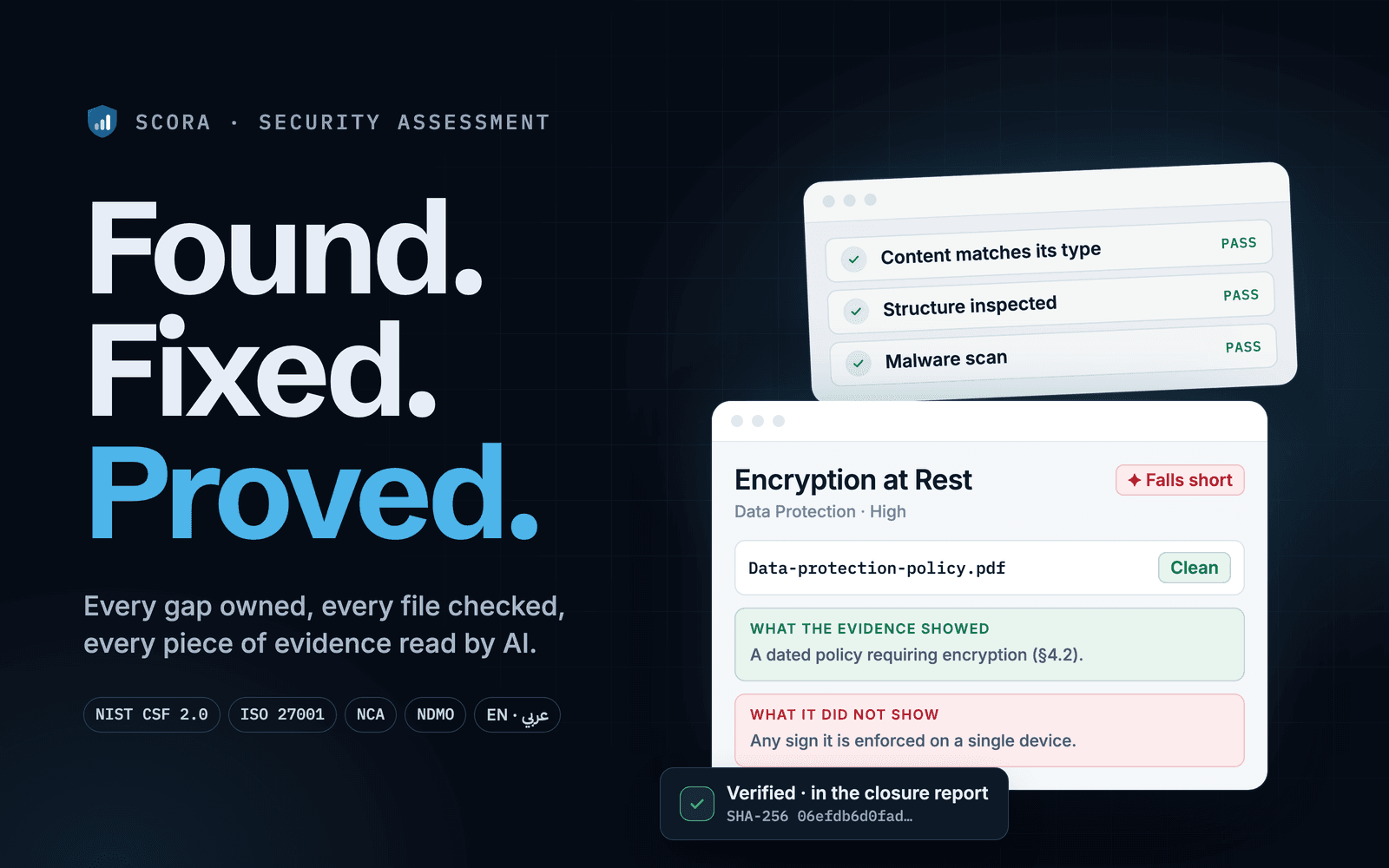
Security posture assessment without the consultant invoice
A security, compliance and risk assessment platform that scores an organisation against NIST CSF 2.0, ISO 27001:2022 and an SME health check, then returns a prioritised action plan.